

Cancer Isn’t One-Size-Fits-All…And Neither Is Support
Every type of cancer brings unique challenges, and as a supporter, your presence matters. Here’s a quick guide to understanding the differences and showing up in ways that help.
Let’s be honest: Cancer is confusing. Even saying “cancer” like it’s only one disease is misleading. “Cancer” is an umbrella term for more than 100 different diseases that affect the body in different ways. So when someone you care about is diagnosed, it’s okay to feel totally overwhelmed and unsure of what to do next. Here’s the good news: you don’t need a medical degree to be a good supporter.
You just need to show up, listen, learn, and stay present.
Authoritative cancer sites and the healthcare team should be a first stop for specific details about what’s next. For cancer specific information for AYAs, a good place to start is Adolescents and Young Adults (AYAs) with Cancer – NCI. Below is a brief overview of some common types of cancer for AYAs, including what they might be dealing with, and a few tips on how you can show up.
Blood Cancers (Leukemia, Lymphoma)
What they are:
Blood cancers affect the blood, bone marrow, and lymphatic system. Common types like leukemia and lymphoma often require aggressive treatments such as chemotherapy, immunotherapy, or stem cell transplants. These treatments can stretch over months or even years.
Support challenges:
- Long or repeated hospital stays and isolation (especially during transplant)
- Fatigue, high infection risk and isolation
- Emotional rollercoaster of remission, relapse, and “wait and see” scans
How to show up:
✅ Be consistent with check-ins, even when they don’t respond. Silence doesn’t mean your support isn’t appreciated.
✅ Send hospital-friendly care packages: think unscented lotion, cozy socks, games, or snack packs (if allowed).
✅ Ask how they want to connect—talking, texting, memes, or even just silent presence. Let them set the tone.
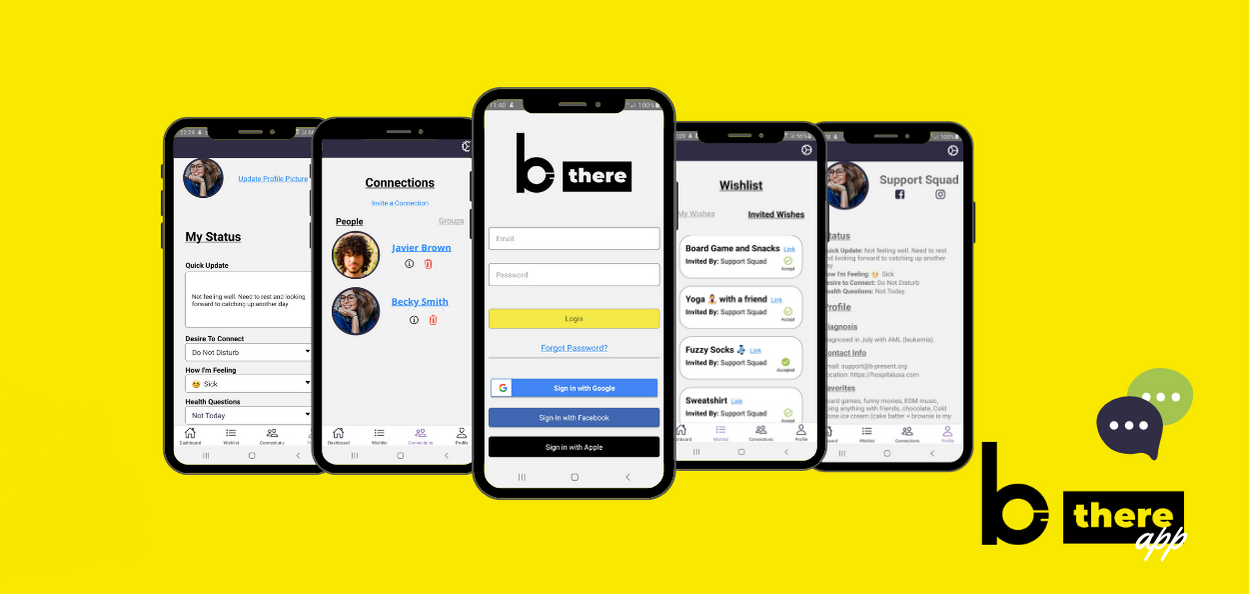
Pro Tip: Download b-there, a connection and support app, that allows your loved one to share their status, mood, and desire to connect each day. Supporters can check the app before they connect or come by.
Solid Tumors
What are Solid Tumors?
Solid tumors are abnormal growths that can show up in many parts of the body, like the breast, lung, liver, or skin. They can be cancerous (malignant) or not (benign), but either way, they can bring major physical and emotional challenges. The type of solid tumor often determines the treatment path—and the kind of support your loved one might need.
Breast Cancer
Breast cancer is one of the most common cancers in young adults, often impacting body image, fertility, identity, and intimacy. Treatment may involve surgery, chemotherapy, radiation, and long-term hormone therapy.
Support Tip: Don’t assume how they should feel. Let them lead emotionally and physically—especially when it comes to body changes and boundaries.
AYA Resource: Young Survival Coalition – Focused specifically on young adults with breast cancer, offering support programs, mentorship, and community.
Thyroid Cancer
Often considered “highly treatable,” thyroid cancer can still bring major emotional and physical challenges, including surgery and lifelong hormone therapy.
Support Tip: Thyroid cancer often gets labeled the “good cancer”. Skip the “good cancer” talk. Every diagnosis carries fear, disruption, and uncertainty. What helps most is compassion, not comparison.
AYA Resource: ThyCa: Thyroid Cancer Survivors’ Association – Offers support and education, including resources for young adults.
Testicular Cancer
Most common in young adult men, testicular cancer often requires surgery and may involve chemotherapy or radiation. It can impact body image, identity, fertility, and emotional health—even when caught early and treated successfully.
Support Tip: Don’t make jokes or downplay it just because it’s “treatable.” Be someone they can talk to—about fears, fertility, or nothing at all. Your respect and presence matter more than the perfect words.
AYA Resource: Testicular Cancer Foundation – Provides resources and support tailored to young men, including awareness and survivor networks.
Melanoma
Melanoma can develop at a young age, especially in people with frequent sun exposure or genetic risk. It may require surgery and immunotherapy, and if advanced, can be life-threatening.
Support Tip: Don’t minimize it. Melanoma can be aggressive. Show up with small comforts—snacks, games, quiet companionship—and take their fears seriously.
AYA Resource: Melanoma Research Foundation Provides education and support resources, including young adult melanoma stories and peer connections.
Colon Cancer
Colon cancer is rising in young adults, despite often being seen as an older person’s disease. Treatment may involve chemotherapy and surgery, including the use of an ostomy bag, and long recovery periods.
Support Tip: Respect body and privacy boundaries. If they’re adjusting to an ostomy or major body change, offer help without awkwardness. Let dignity lead your support.
AYA Resource: COLONTOWN – A vibrant, patient-led online community with AYA-specific support groups.
Add to reading list:
Foods to Avoid While Undergoing Cancer Treatment: A Guide for Supporters
Cervical Cancer
Cervical cancer may require surgery, chemotherapy, radiation, or fertility-impacting treatments. It can deeply affect a person’s sense of identity, sexuality, and relationships.
Support Tip: Be sensitive when discussing fertility, dating, or intimacy. Let them guide what feels safe to talk about, and don’t make assumptions about their relationship status or desires.
AYA Resource: Cervivor – Offers community, advocacy, and support for young people affected by HPV-related cervical cancers.
Head, Neck & Throat Cancers
What they are:
These cancers can affect talking, swallowing, breathing, and appearance. Treatments like surgery or radiation may alter speech or require feeding tubes, making everyday communication and eating difficult.
Support challenges:
-
Speaking may be difficult or impossible at times
-
Eating and drinking can be painful or off-limits
-
Changes to the face, neck, or voice may affect self-image and confidence
How to show up:
✅ Be patient with communication—don’t finish their sentences or rush responses
✅ Normalize using tools like whiteboards, text-to-speech apps, or thumbs-up/thumbs-down
✅ Don’t stare or avoid eye contact. Keep showing up with presence and respect
Support Tip: Silence doesn’t mean absence. Even without words, your calm presence and nonverbal care (eye contact, a gentle touch, a shared moment) can speak volumes.
What do “stages” and “metastatic” mean?
When someone is diagnosed with cancer, you might hear terms like “stage 1” or “metastatic.” These refer to how far the cancer has spread in the body. Early stages (like stage 1 or 2) usually mean the cancer is still localized. Later stages (like stage 3 or 4) often mean it has spread to nearby tissues or organs. If it’s called metastatic, that means the cancer has traveled to distant parts of the body. Every cancer type is different, and stage doesn’t always predict outcome, but it does affect treatment plans. You don’t need to be an expert to offer support. Just be there, listen without judgment, and follow their lead.
Support Is Personal, So Make It Personal
You don’t have to memorize treatment plans or cancer subtypes to be a good supporter. But we do encourage you to research your loved one’s condition so you can better understand what they are going through. Keep in mind: the emotional impact of cancer often continues long after treatment ends. Anxiety, fatigue, fear of recurrence, and identity shifts are common, and real. Your steady presence can mean just as much (or more) during survivorship as it did during treatment.
Here’s what to remember:
- Stay consistent. Cancer is a long haul. Don’t ghost after the “hard part.”
- Don’t assume. No two cancers (or people) are the same.
Be present, not perfect. It’s better to show up imperfectly than not at all.
Want to Learn More?
We are here to help you show up better. Check out these trusted cancer specific sources:
- Cancer.net
- Young Survival Coalition
- Stupid Cancer
- National Cancer Institute
- Leukemia & Lymphoma Society
Pro Tip: The AYA Cancer Experience is Unique. When searching online, consider including “AYA” or “young adult” in your search to help find specifically designed for this age group.
Pro Tip: AYA-Specific Resources: Many authoritative sites and treatment centers are starting to have website pages and programs for AYAs, so be sure to search for this specialty from their main page.
And of course, stick with us. We’ve got real talk, free tools, and a whole community of people figuring it out together.