Our multidisciplinary study team is focused on understanding the barriers, perceptions, and experiences that influence AYA social support. These insights will drive the development of age-appropriate training, communication strategies, and evidence-based solutions to enhance care delivery and improve outcomes for patients and their support networks.
Interested in collaborating, contributing data, or joining an innovation workshop?
NEW - Learning Community - Advancing AYA Social Support
In response to our recent study on social support in a clinical setting, and in collaboration with the AYA Cancer Coalition (AYACC), we are excited to host a quarterly Social Support Learning Community to move social support ideas forward – together. This will be a safe and collaborative space where clinicians, researchers, and community organizations can ask questions, share real world strategies, tools, and challenges, and work together to develop practical approaches that improve social support for young adults with cancer. Interested? We hope you will join us!
Led by University of Michigan, Dearborn, this study explores current practices and barriers in assessing and addressing social support for AYAs with cancer in a clinical setting. Understanding the who/what/when/how of social support is currently addressed, as well as challenges, barriers and gaps that may exist guides the development of future training, resources and interventions that aim to reduce disparities and enhance psychosocial care for AYAs across diverse healthcare systems.
Staying connected helps preserve normalcy and important relationships, reduces isolation health risks, and improves the likelihood of successful transition to survivorship after treatment is over. Unfortunately, AYA patients and their supporters often lack the life experience to stay connected and seek/offer support after the news of a cancer diagnosis.
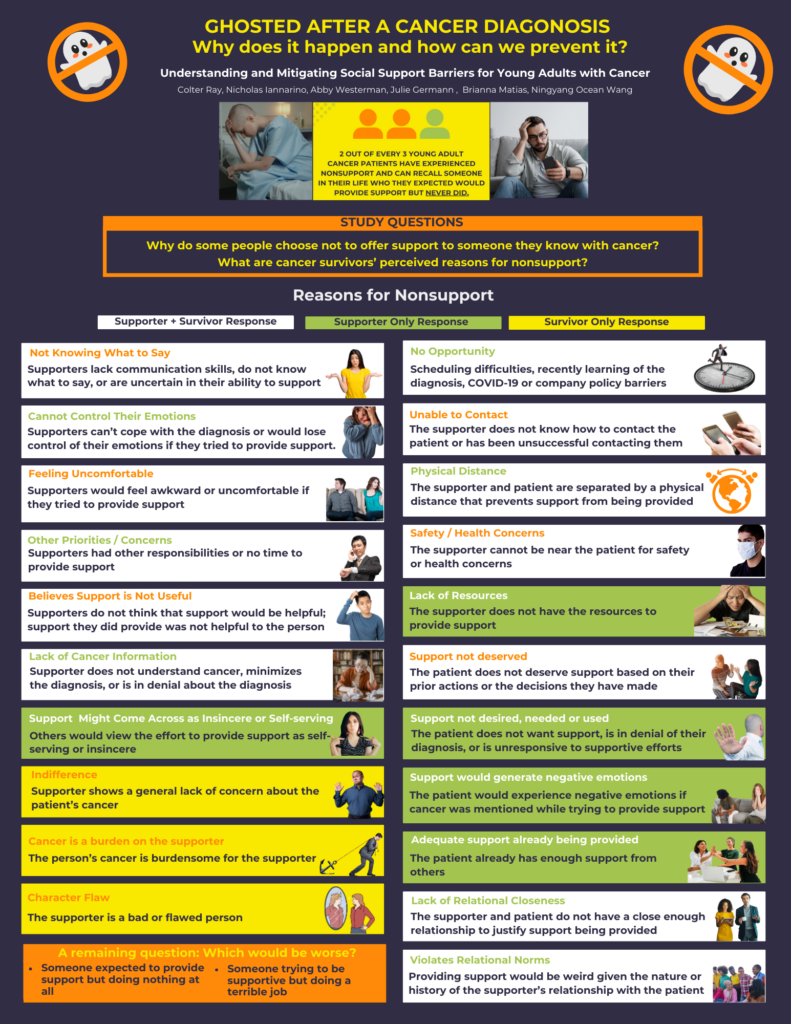
Our multidisciplinary study team explored the reasons young adults (ages 18–39) struggle or avoid providing support to young adult cancer patients, and the young adult cancer patients’ perceptions of why they have not received support. The study analyzed 722 reasons (284 from young adult patients and 438 from young adult supporters). This study, led by LSU, explored the social support barriers and root causes of nonsupport (also referred to as “cancer ghosting“) and is informing the development of resources and interventions that manage patient expectations and help them problem solve, and empowers and activates the social network that wants to be present but doesn’t know how.
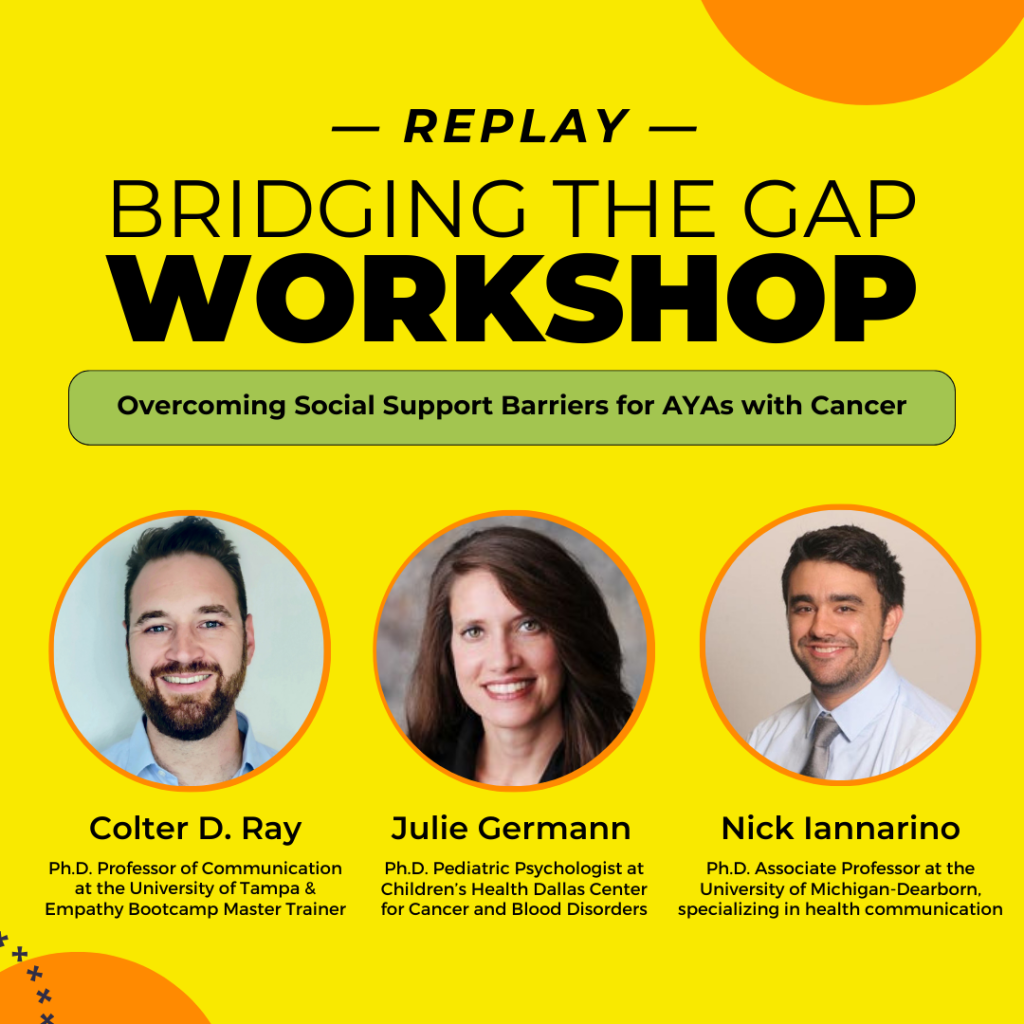
Bridging the Gap Workshop - Overcoming Social Support Barriers for Adolescents & Young Adults with Cancer
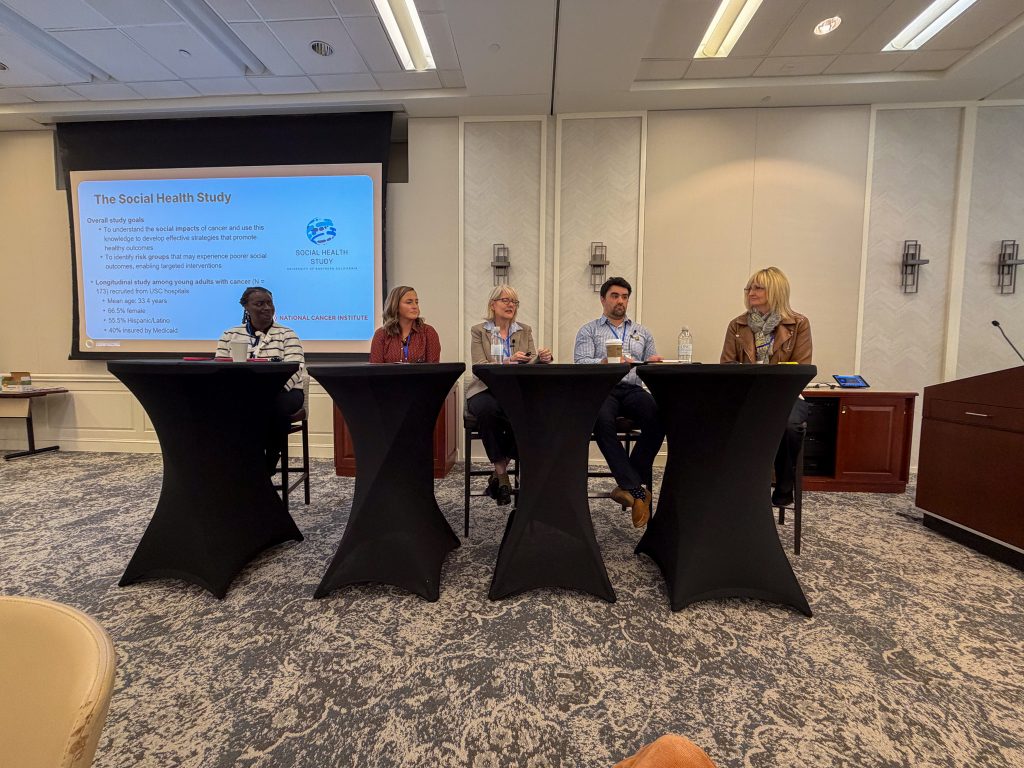
In this October 2023, our research team shared the results from our study, Barriers to Seeking and Communicating Social Support: A Study of Young Adult Cancer Patients and Supporters. The briefing was followed by a round table discussion with workshop participants to hear their thoughts.