
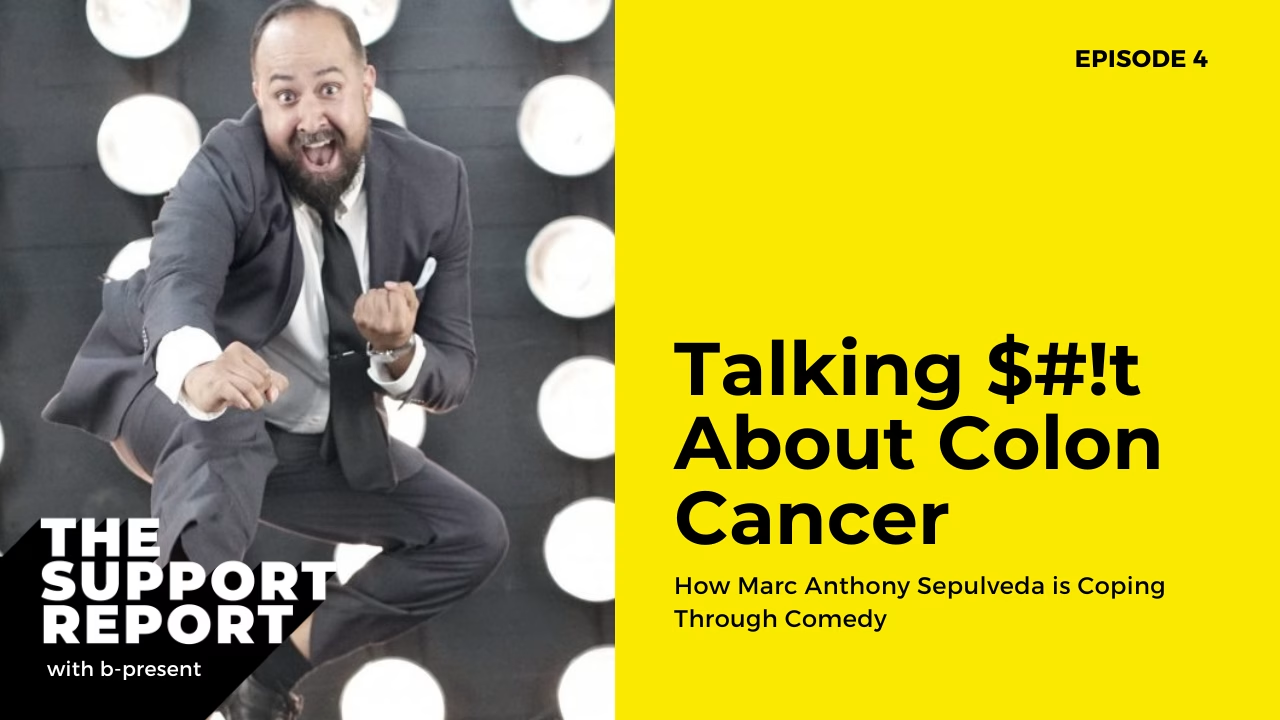
At b-present, we believe in showing up—awkwardly, imperfectly, but with heart. That’s why we’re telling the story of Marc Anthony Sepulveda. He’s an actor, filmmaker, colon cancer survivor, and unapologetic truth-teller.
Marc was diagnosed with Lynch syndrome and colon cancer at 33. The symptoms started years earlier, but like so many young adults, he was told he was “too young” for cancer. His story, shared on The Support Report with b-present, is real and raw. It’s about survival, self-advocacy, humor, mental health, and the people who showed up when he needed them most.
Whether you’re navigating cancer yourself or trying to be there for someone who is, here are the truths Marc wants you to hear.
1. Advocate for Yourself. Even When They Don’t Believe You.
Marc started showing symptoms around 29. But no insurance and dismissive doctors meant his pain was brushed off.
“I went to a doctor, and the doctor said I had hemorrhoids… The doctor tells me, ‘We don’t check out for colon cancer until you’re 50.’”
When he finally got insurance and pushed for answers, they found late-stage colon cancer. He believes it had been growing for four years.
What supporters should know:
Listen when someone says something’s wrong. Back them up. Push with them. Medical gaslighting is more common than you think, and support matters even before an official diagnosis.
2. Lynch Syndrome Needs More Attention
Marc has Lynch syndrome, a hereditary condition that dramatically increases the risk of colon and other cancers. Multiple members of his family have been affected, and unfortunately, some didn’t survive.
“Lynch syndrome, I believe it’s one out of every 300 people have it, and they don’t know about it.”
What supporters should know:
If someone in your life has a family history of cancer, encourage them to ask about genetic testing. Don’t assume they’ve heard of Lynch syndrome. Most people haven’t. You could help them catch it early.
3. The System Is Messy. Support Can Make It Bearable.
After Marc’s diagnosis, he had to fight through three more weeks of paperwork and disconnected medical systems just to get surgery.
“I had to get a new primary, a new specialist… I’m like, ‘You guys are all part of the same system!’”
During that time, anxiety built up. Fear crept in. What kept him grounded? Friends who called. Family who checked in. The people who didn’t disappear.
What supporters should know:
You can’t fix broken healthcare. But you can make someone feel less alone in the chaos. Text. Call. Show up. Even just once a week. It matters.
4. There’s No “Perfect” Way to Reach Out. Just Do It.
Support doesn’t have to be grand or poetic. It just has to be real.
“If you feel weird reaching out, just say, ‘Hey, I’m here if you need to talk.’ You don’t need to fix anything. Just listen.”
Marc didn’t need fancy care packages or inspirational quotes. He needed people. People who said, “I’m here.” People who didn’t bail when things got uncomfortable.
What supporters should know:
Silence hurts more than awkwardness. Don’t ghost. Don’t overthink. Don’t wait for the “right” time. Just reach out.
Add to reading list:
I Have Cancer, And No One Cares: What Is Cancer Ghosting?
5. Survivorship Is Complicated. Support Shouldn’t Stop.
Marc survived cancer. That doesn’t mean it’s over. As a Lynch syndrome carrier, he’s still at risk. Emotionally, he’s still healing. Physically, he’s still paying attention to every weird ache and off feeling.
“Everyone wants the Hollywood moment where you beat cancer and move on. But no one talks about the mental weight. The anxiety. The loneliness. That’s the real story.”
That real story? It’s now the foundation of his film Bonus Time—a comedy about a cancer survivor trying to fix his relationships and rebuild after the storm.
What supporters should know:
Remission isn’t the finish line. Don’t peace out once treatment ends. Survivors still need care, laughter, space to vent, and reminders that they matter.
6. Humor and Creativity Are Survival Tools
Marc credits comic books, storytelling, and humor with helping him survive, not just the cancer, but the fear, grief, and anxiety that came with it.
“A sense of humor keeps me from crying… Comic books have always been there since childhood. Maybe because they’re something I can control.”
His film, Bonus Time, isn’t just entertainment. It’s medicine. It’s for anyone who’s ever said, “I survived… now what?”
What supporters should know:
Creativity heals. Humor heals. Don’t be afraid to laugh with your person. Invite joy in. Suggest a movie night. Talk about anything other than cancer. That balance keeps people going.
Add to reading list:
Cancer Humor: Coping Through Laughter
Final Thoughts: Keep Showing Up
“Fall down six times, get up seven.”
Marc’s story reminds us what real support looks like. It’s not always pretty. It doesn’t come with a script. It just takes one thing: presence.
So if someone you care about is going through cancer, don’t wait. Don’t worry about the perfect thing to say. Show up anyway. And keep showing up—still, always.
Hear the full conversation
Support Report Podcast: Episode 4
Follow Marc and Bonus Time
Instagram: @bonus_time_the_movie
Facebook: Bonus Time the Movie